Most makeup mistakes aren't shade mistakes — they're undertone mistakes. The foundation that turned orange by lunch, the lipstick that made your teeth look yellow, the blush that never quite belonged to your face: all three usually trace back to the same missed step. Learning how to find your skin undertone takes about ten minutes, costs nothing, and quietly improves every makeup decision you make afterward.
This guide walks through what an undertone actually is, five reliable ways to determine your skin undertone at home, how to recognize the often-misdiagnosed neutral, and what your answer means when you're standing in front of a shade wall.
What a skin undertone actually is
Your skin has two separate color properties, and they're routinely confused:
- Skin tone is the surface — how light or deep your skin is, from fair to rich. It shifts with sun, seasons, and time.
- Undertone is the hue underneath — the subtle cast that colors everything above it. It doesn't shift. The undertone you have at twenty is the one you have at seventy.
Undertones come in three main families. A warm undertone leans golden, peachy, or yellow. A cool undertone leans pink, red, or blue. A neutral undertone sits between the two, with neither hue dominating. (There's also olive — a soft green-grey cast that muddies both warm and cool products — which behaves enough like its own category that many artists treat it as one.)
Any depth of skin can carry any undertone. Fair skin can be warm; deep skin can be cool. That's exactly why judging by eye fails so often, and why the tests below look at how your skin behaves rather than how it looks at a glance. For a deeper tour of the three families themselves, see our companion guide, warm vs cool vs neutral undertones.
How to find your skin undertone: five at-home tests
No single test is definitive — lighting, circulation, and skin depth can all skew one reading. Run three or more and look for the pattern. Agreement across tests is your answer.
1. The vein test
In natural daylight, look at the veins on the inside of your wrist. If they read greenish, your skin's yellow cast is filtering the blue — that points warm. If they read blue or purple, that points cool. If you honestly can't decide, or they look blue-green, note it down as a neutral signal. On deeper skin, veins can be harder to read; give this test less weight and lean on the others.
2. The jewelry test
Hold gold and silver jewelry against your bare inner arm or next to your face in daylight. Warm undertones tend to glow next to gold, while silver can look slightly stark on them. Cool undertones brighten against silver, while gold can look brassy. If both genuinely flatter you — not "both are fine" but both actively work — that's a classic neutral tell.
3. The white paper test
With a clean, makeup-free face, hold a sheet of pure white paper beside your cheek in a mirror. Against true white, your skin's cast becomes easier to name: a yellow or golden tinge suggests warm, a pink or rosy tinge suggests cool, and a cast you can't confidently call either way suggests neutral. A crisp white t-shirt works the same way.
4. The sun test
Think about how your skin responds to sun over a season, not a single afternoon. Skin that tans easily and rarely burns usually runs warm. Skin that burns first, or flushes pink before anything else, usually runs cool. This one is about melanin behavior, so it's most useful on fair to medium skin — deep skin tans regardless of undertone.
5. The wardrobe test
Raid your own closet. The colors strangers compliment you in are data. Warm undertones tend to come alive in olive, rust, coral, cream, and warm reds. Cool undertones light up in true blue, emerald, lavender, fuchsia, and blue-based reds. If your best colors span both lists, add another tally to neutral.
SKIP THE GUESSWORK
Your undertone, read in 60 seconds.
True Shade's undertone quiz asks the right questions once, tells you whether you're warm, cool, or neutral — then checks every product you scan against that answer automatically.
Take the free undertone quiz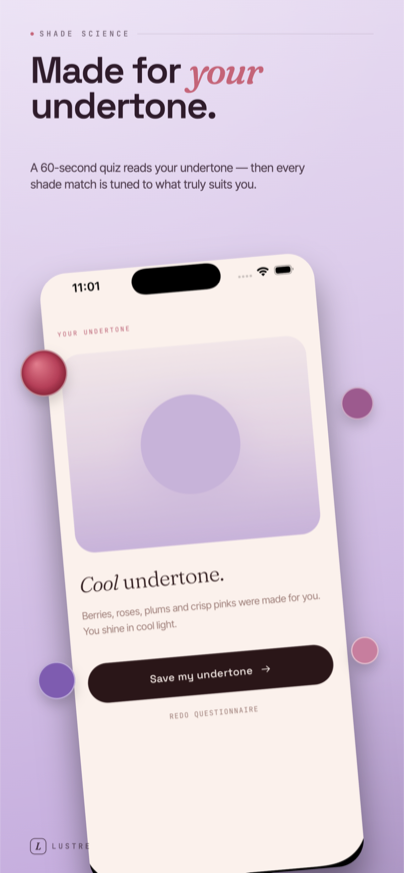
The neutral undertone: makeup's most misdiagnosed answer
People treat "neutral" like a shrug — the answer you give when the tests didn't work. It's the opposite. Neutral is a real, common undertone, and its signature is precisely that mixed evidence: blue-green veins, equal comfort in gold and silver, a best-colors list that ignores the warm/cool divide.
If that's you, two things follow. First, stop retaking the tests hoping for a cleaner answer — ambiguity is the diagnosis. Second, enjoy the range: neutral undertones can borrow from both sides of most shade ranges. Your only real risk is a product at the extreme of either family, like a heavily golden foundation or an icy-pink lipstick, which can tip you visibly warm or cool.
One caution: olive undertones frequently misread as neutral, because olive skin also returns confusing test results. The tell is different, though. Neutral skin looks balanced in most foundations; olive skin looks subtly wrong in most of them — a touch grey in cool shades, a touch orange in warm ones. If foundations never quite sit right on you in either direction, investigate olive before settling on neutral.
Your skin tone will change. Your undertone won't.
This distinction rescues you from a common trap: re-testing your undertone every time your skin changes. Summer sun deepens your skin tone; winter lightens it; the years shift it slowly. Through all of it, the hue underneath stays put. A warm-toned person who tans in July needs a deeper warm foundation — not a different undertone family.
Practically, that means you do the undertone work once and keep the answer for life, while your depth match deserves a check about twice a year. It also explains a familiar mystery: the foundation that matched perfectly in January and looks pale and pink-ish in August didn't change undertone on you — your depth moved, and the old shade's undertone now stands out against it.
What your undertone changes at the shade wall
Once you know your answer, it starts paying off immediately:
- Foundation. Most brands encode undertone right in the shade name — W for warm, C for cool, N for neutral, sometimes G for golden or P for pink. Knowing your letter cuts a 40-shade wall down to a handful, and it's the difference between a foundation that vanishes into your skin and one that turns orange or goes grey and ashy by mid-afternoon. Our complete foundation shade guide covers the depth half of the equation.
- Lipstick. Warm undertones flatter in brick, coral, and tomato reds; cool undertones in berry, mauve, and blue-based reds; neutrals roam. The right family makes teeth look whiter and skin look brighter — the full logic is in our guide to choosing a lipstick shade for your skin tone.
- Blush and bronzer. Peach and terracotta lean warm; rose and plum lean cool. Bronzer that reads muddy on you is almost always an undertone mismatch, not a depth one.
This is also where an app earns its place in the routine. True Shade runs the undertone reading once, as a 60-second quiz, then checks every foundation, lipstick, or blush you scan against your result — so the "is this my undertone?" question gets answered at the shelf, before the product goes in the basket.
The short version
- Undertone is the fixed hue beneath your skin — warm (golden), cool (pink), or neutral (balanced) — and it's separate from your changeable surface skin tone.
- To find yours, run several tests in daylight — veins, jewelry, white paper, sun response, wardrobe — and trust the pattern, not any single result.
- Mixed results across every test usually mean neutral; consistently "almost right but slightly off" foundations may mean olive.
- Test once, keep the answer for life, and re-check only your depth as seasons change.
- Your undertone letter (W/C/N) is the fastest filter at any shade wall — for foundation, lipstick, and blush alike.