If you've ever typed "what makeup products do I need" into a search bar and come away with a shopping list of twenty-three items, take a breath. You don't need most of it. The beauty industry profits from the idea that a routine is a collection; it isn't. A routine is a handful of products that suit your skin, applied the same way most days until it takes five minutes and no thought.
Here is the honest version: six products cover everything a beginner routine needs to do — even the skin, define the eyes, and put back the color a base takes away. This guide walks through each one, why it earns its place, what you can confidently skip for now, and how to avoid the classic first-purchase mistakes.
What makeup products do I need? The honest six
Think of these as the load-bearing walls of a face. Every one of them does a job no other product on the list can do, and nothing here exists just because a display shelf said so.
1. A tinted base — or a light foundation
Start with the product everything else sits on. For most beginners, that's not a full-coverage foundation — it's a tinted moisturizer or skin tint that evens your tone while still looking like skin. If you want more coverage, choose a light-to-medium foundation you can build up rather than sheer down. Either way, this is the one purchase where shade matching is non-negotiable: a base that's even slightly too warm or too light will read as a mask. Our complete guide to finding your foundation shade covers depth, undertone, and the jawline test in detail.
2. Concealer
Concealer is the precision tool your base isn't. A shade at — or half a shade lighter than — your base handles dark circles, redness around the nose, and the occasional blemish, using a fraction of the product a heavier foundation would take. On low-effort days, concealer in three or four spots plus nothing else is a legitimate, finished look.
3. A brow product
Brows frame every other choice you make, which is why makeup artists reach for them before eyeshadow, liner, or anything else on the eye. A simple pencil or tinted gel close to your natural brow color, brushed through in the direction of hair growth, makes the whole face look deliberate. Skip anything that requires stenciling, mapping, or a steady hand you don't have yet.
4. Mascara
One coat of mascara does more for the eyes than an entire palette in unpracticed hands. It opens the eye, catches light, and reads as "awake" from across a room. Black if your coloring is deep or you like definition; brown if you're fair or want something softer. This is also a category where drugstore formulas compete honestly with luxury ones, so start affordable.
BUY RIGHT THE FIRST TIME
Six products. Zero wrong shades.
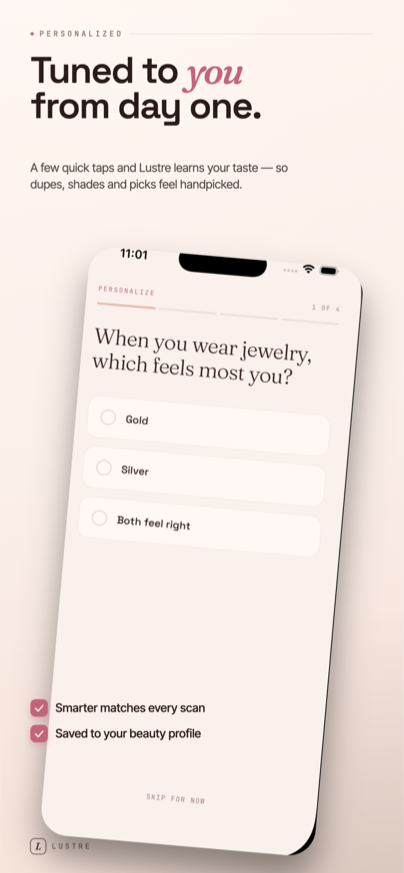
True Shade reads your undertone with a 60-second quiz, then checks every product you scan against it — exact shade, ingredient flags, and cheaper dupes ranked by match. A beginner kit with no regret purchases.
Download True Shade free5. Cream blush
Any base, however sheer, flattens the natural color in your cheeks — blush puts it back. Cream formulas earn the beginner slot over powders because they blend with fingertips, forgive uneven application, and melt into a tinted base instead of sitting on top of it. Choose peach or coral tones if your undertone runs warm, rosy pinks if it runs cool, and soft mauves if you're neutral. Not sure which you are? Our guide to finding your skin undertone settles it in a few minutes.
6. One lip product
Finish with a single lip product you can apply without a mirror: a tinted balm, a sheer lipstick, or a gloss with real color. That "without a mirror" test matters — a beginner's lip product should be an afterthought, not a project. When you're ready to go bolder, choosing a lipstick shade for your skin tone is the natural next step, and it follows the same undertone logic as your blush.
What to skip (for now)
None of these are bad products. They're just later products — refinements that assume the fundamentals are already easy. Save your money and counter space until then:
- Contour kits. Contouring is sculpting with shadow, and it punishes imprecision. Until blending a base feels automatic, contour tends to read as stripes. Blush gives you 80% of the dimension for 10% of the skill.
- 40-shadow palettes. You will use four of the forty. A giant palette is a museum, not a tool — if you want eyeshadow at all, a single neutral quad does everything a beginner eye needs.
- Setting sprays and powders. These solve longevity problems most beginners don't have yet, especially over a light base. Add one later if your makeup genuinely slides by midday.
- Primers, color correctors, and highlighters. Each fixes a specific, advanced problem. Diagnose the problem first; buy the fix second.
- A brush wardrobe. Fingertips apply cream products beautifully. One fluffy blush brush and the wand your mascara came with will carry you for months.
The pattern behind every item on this list: complexity you haven't earned yet. Makeup rewards repetition far more than inventory. Once the six essentials feel boring — genuinely boring — that's your signal to expand, and our beginner makeup routine guide shows how to sequence the additions.
How to buy right the first time
A small kit only works if every product in it is correct, because there's no backup drawer to rescue a bad buy. Three checks prevent nearly all first-purchase regret.
Match the shade before you pay
Your base and concealer live or die on shade. Two variables decide it: depth (how light or deep your skin is) and undertone (warm, cool, or neutral). Store lighting is famously bad at showing both — foundations that looked right under fluorescents turn orange or ashy in daylight. Test on your jawline in natural light where you can, and let your undertone veto anything that fights it.
Check the ingredients against your skin
The second-most-common beginner regret isn't shade — it's formula. Oily skin drowns a dewy skin tint by noon; dry skin turns a matte foundation to parchment. Read the finish and the ingredient list against what your skin actually does, not what the model in the ad has. Our guide to choosing makeup for your skin type maps formulas to skin behavior, category by category.
Let a scan do the checking for you
This is the part that used to require an experienced friend at the counter. Now it fits in your pocket: point True Shade at any product — in the store aisle, in a creator's video, in your friend's bag — and it identifies the exact product and shade, checks it against your undertone quiz, flags ingredients (a "Clean · no flags" badge when the formula is clean), and lines up cheaper dupes across 600+ brands ranked by shade match. For a beginner buying six products, that's six chances to get it right the first time.
How much should a beginner spend?
Less than the haul videos imply. Mascara, cream blush, brow pencils, and lip balms are categories where drugstore formulas are genuinely excellent — chemists solved these products years ago. Where budget helps is the base, and even there the money buys shade range and formula nuance, not correctness: a perfectly matched affordable foundation will always beat an expensive mismatch. If you allocate anything unevenly, allocate attention — spend it on the shade match, not the price tag.
A reasonable arc: build the full six-product beginner makeup kit at the drugstore, wear it for two months, then upgrade only the products you reach for daily and only if something about them bothers you. Most people discover that very little does.
The short version
- Six makeup essentials make a complete beginner face: tinted base or light foundation, concealer, brow product, mascara, cream blush, one lip product.
- Skip contour kits, giant eyeshadow palettes, setting sprays, and brush wardrobes until the basics feel boring.
- Shade-match the base and concealer in natural light; let your undertone guide blush and lips.
- Check formulas against your actual skin type before buying — finish matters as much as shade.
- Start at the drugstore, upgrade slowly, and spend your attention (not just money) on getting the match right.